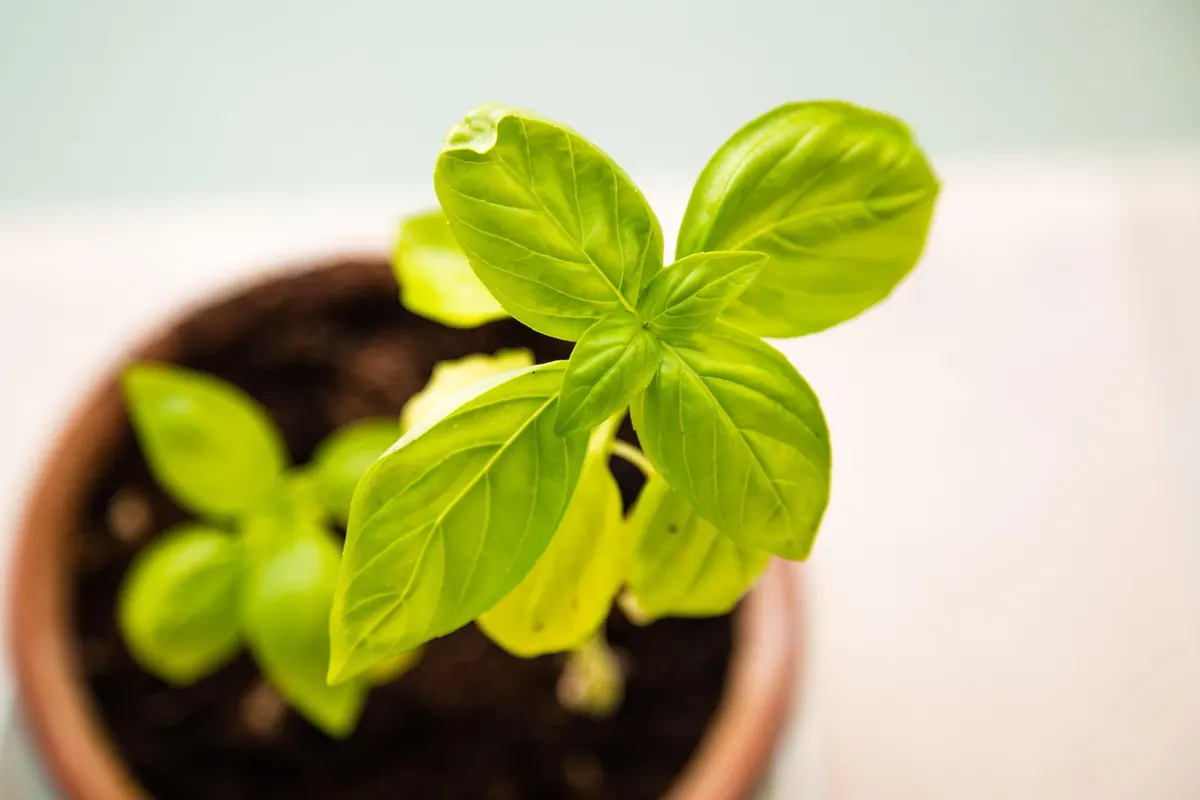
There's a particular optimism in a supermarket basil plant on a kitchen windowsill. It looks splendid for a week, then sulks. The plant is rarely the problem: most herbs sold in the UK are crammed into a pot too small for their roots and placed somewhere with far less light than they want.
Growing herbs in a small space comes down to matching three things — the light you actually have, the pot size you can spare, and the watering you'll genuinely remember to do. Get those roughly right and a steady supply of parsley, mint and thyme is perfectly achievable on a windowsill, a doorstep or a tiny courtyard.
Start with the light, not the herb
Spend a day noticing where the sun lands before you buy anything.
A south-facing windowsill or a sheltered south wall gets the most hours and suits basil, rosemary, thyme, oregano and sage. East-facing gets soft morning sun: fine for chives, parsley and mint. West-facing is similar but hotter in summer afternoons. North-facing is the hardest; stick to mint, parsley and chives and expect slow growth.
Plants in too little light go leggy and pale, with long gaps between leaves on a thin, leaning stem. Turn pots a quarter turn every few days to keep growth even, and keep them close to the glass — a windowsill is noticeably darker 30cm back into the room.
Easy herbs for beginners
- Mint — almost indestructible, but give it its own pot. It spreads by underground runners and will swamp anything sharing its compost. Spearmint for cooking, Moroccan mint for tea.
- Chives — happy in a 15cm pot, returns every year, and regrows after being cut back hard. The purple flowers are edible.
- Flat-leaf parsley — slow to germinate, so buy a plant if you're impatient. It's biennial, so expect it to flower and run to seed in its second year.
- Basil — needs warmth and sun, and hates cold and wet. Keep it out of draughts and don't put it outside until nights are reliably above about 10°C.
- Thyme — drought-tolerant, hardy through UK winters, and happier in gritty compost than rich stuff.
- Rosemary — wants a big pot, sharp drainage and full sun. It dislikes being waterlogged in winter more than it dislikes cold.
- Coriander — quick from seed but bolts in heat. Sow a few seeds every three weeks for a continuous crop.
Pots, compost and drainage
A herb in a 9cm nursery pot needs moving on within a few days, not weeks. As a rough guide: 15cm for basil, parsley, coriander and chives; 20cm for mint; 25–30cm for rosemary, sage and thyme.
Peat-free multipurpose compost suits most herbs. For Mediterranean types, mix in a couple of handfuls of grit or horticultural sand. Check the pot has drainage holes — if compost escapes, cover them with a piece of broken crock or mesh. A saucer catches drips, but empty it after half an hour so roots aren't sitting in water.
Group pots together: they shade one another's compost and slow evaporation, which matters on a hot weekend.
Watering: the bit most people get wrong
Water thoroughly and less often rather than little and often. Push a finger into the compost to the first knuckle: if it's damp, leave it; if it's dry, water until it runs out of the bottom. Lifting the pot tells you plenty — a dry pot is startlingly light.
Water in the morning where you can, and aim at the compost rather than the leaves; wet foliage in still indoor air invites mould. Small pots dry out fast, especially terracotta in sun, so check daily in summer and weekly in winter.
Learn the difference between wilting and drowning. Basil collapses dramatically in heat and revives within an hour of a drink. Rosemary that wilts and yellows is usually too wet — check drainage instead of adding more water.
Feeding, pinching and pests
A weak liquid feed every fortnight through spring and summer keeps leafy herbs productive. Mediterranean herbs need very little; overfeeding gives lush, bland leaves with less aroma. Don't feed between late autumn and early spring, when growth has stopped.
Pinching out is the difference between a straggly plant and a bushy one. Nip the growing tip of basil just above a pair of leaves and two shoots will grow from that point. With mint and chives, remove flower buds if you want leaves rather than blossoms.
Greenfly and whitefly love tender indoor growth. A firm jet of water knocks off most of them; repeat every few days. Tiny black flies around the compost usually mean it's staying too wet — water less and let the surface dry. Outdoors, check pot rims and undersides for slugs and snails, or stand pots on gravel. If you use any spray, make sure it's approved for edible crops and follow the label.
Harvesting so the plant keeps giving
Never take more than a third of the leaves at once.
- Basil: pinch the top pair of leaves just above a node. Don't strip a stem bare.
- Chives: cut to about 3cm above the compost with scissors; they'll regrow.
- Parsley: snip or twist outer stems from the base, leaving the centre to carry on growing.
- Mint: take the top two pairs of leaves from a stem, cutting just above a leaf joint.
- Rosemary and thyme: snip soft green tips only. Cutting into old, leafless wood rarely regrows.
Pick in the morning if
Photo: Pexels / Pixabay